Key Takeaways:
- The comparison of covered patios vs. pergolas usually comes down to shade; full coverage or a lighter structure that allows filtered light.
- Pergola vs. patio cover isn’t just about looks. It changes how usable the space feels when the sun’s actually hitting it.
- Pergola shade options help (canopies, panels, all of that), but they don’t behave the same as a solid roof.
- Once things get more involved, covered patio builders usually make the difference between “looks good” and “actually holds up.”
Shade sounds simple…until you start comparing options.
A covered patio and a pergola both create relief from the sun, but they don’t function the same way. One gives you consistent coverage. The other gives you flexibility, airflow, and a different look altogether.
In the Carolinas, that difference matters. Summer heat, humidity, and sudden rainstorms can quickly affect how comfortable your outdoor space feels.
So choosing between pergolas vs. patio covers isn’t just about style; it’s about how you plan to use the space day to day.
Covered Patio vs. Pergola: What’s the Difference?
At first glance, they kind of blur together.
There’s a structure. Some overhead coverage. Shade, technically. From a distance, it all reads the same.
The difference becomes clear once you stand under each structure.
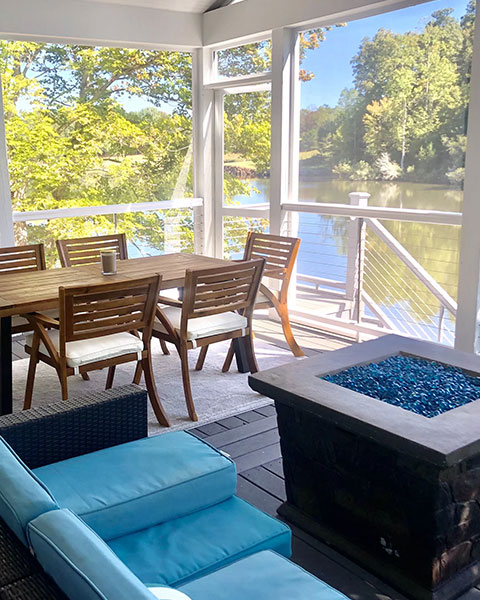
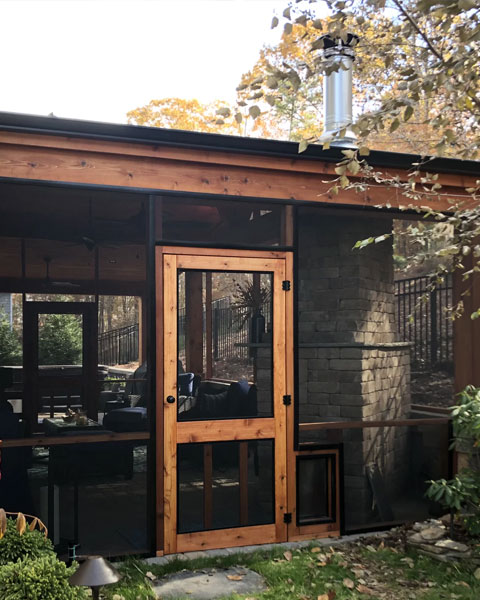
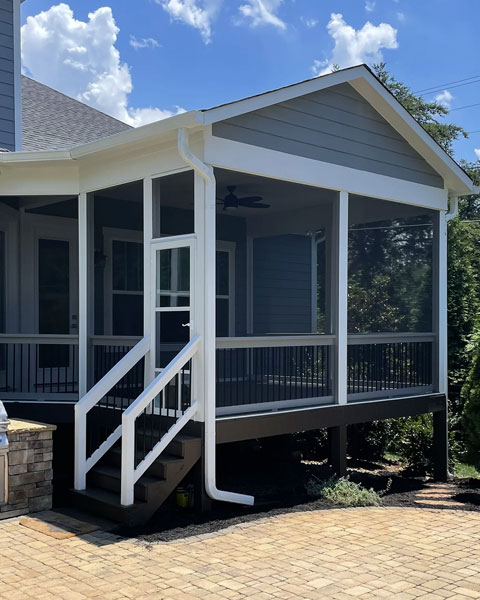
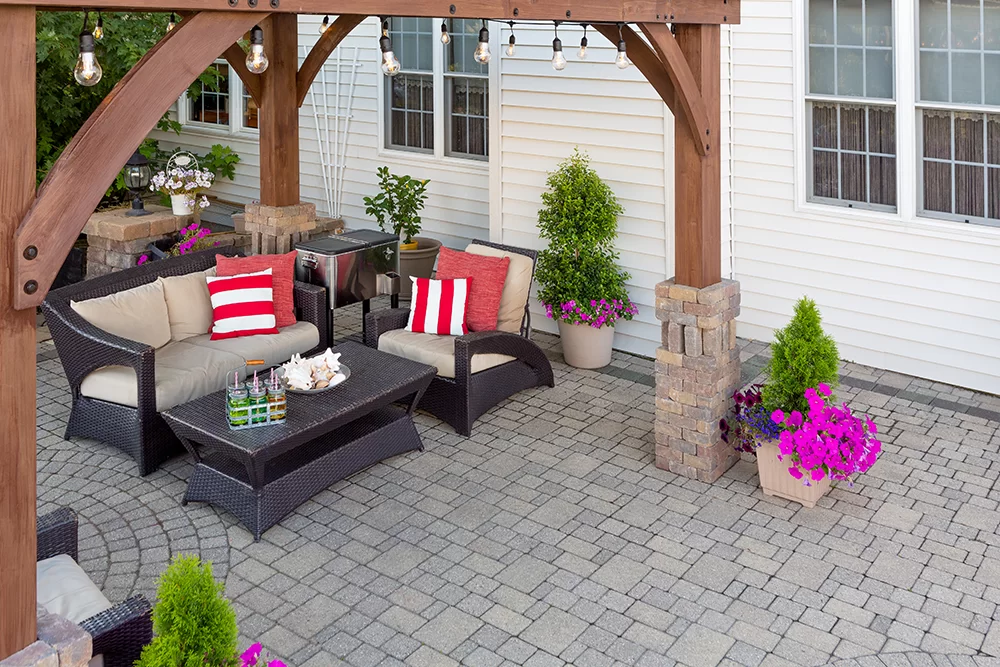
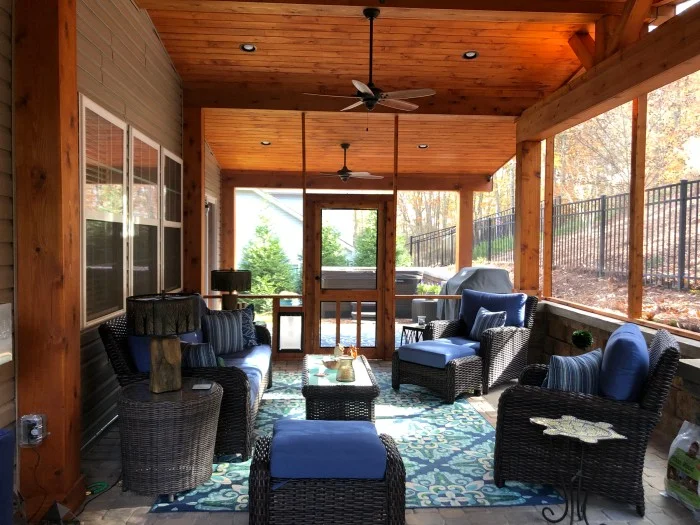
A covered patio feels solid. You’re out of the sun, out of the rain, no light slipping through. It’s closer to being inside than you expect, just without walls.
Pergolas don’t do that.
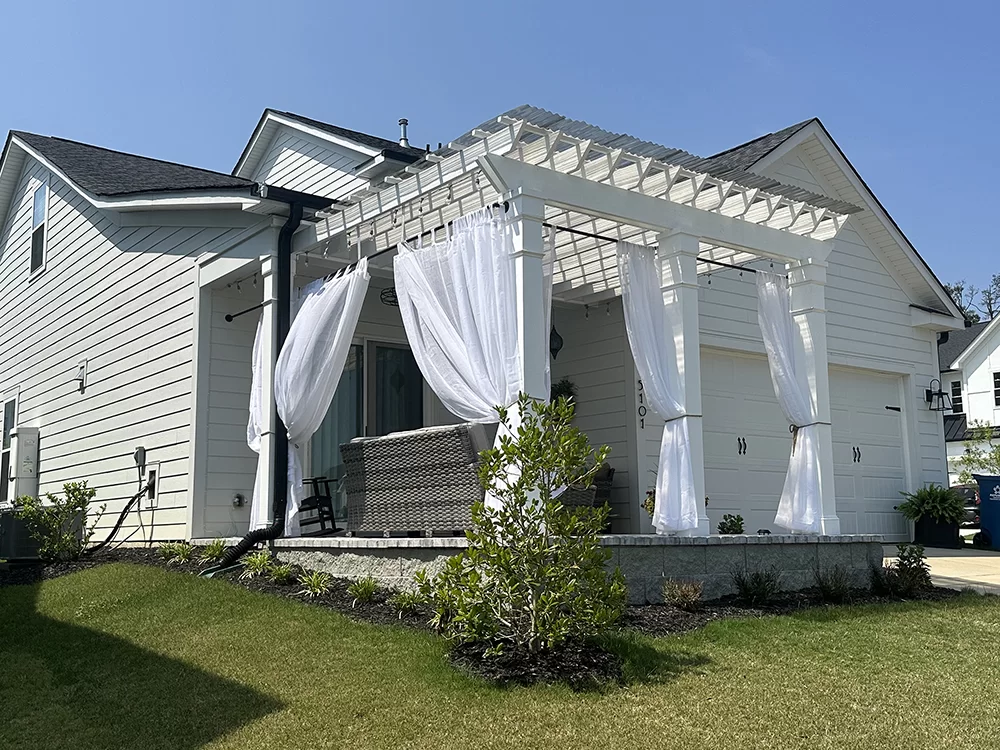
They’re more open. Slats across the top, light coming through at different angles, depending on the time of day. It can look great while still allowing sunlight and airflow, which many homeowners prefer.
And that’s really where things split.
It’s not just how they look. It’s how they behave once you’re actually using the space.
Shade and Sun Protection
This is where most people make the decision.
When comparing a covered patio vs. a pergola, the question usually comes down to how much sun you actually want to block and how consistent the shade needs to be.
A covered patio gives you full coverage. Midday sun, late afternoon flare, sudden rain… it handles all of it the same way. That’s why it’s one of the more reliable outdoor structures for sun protection, especially in the Carolinas, where heat and humidity stack up fast.
Pergolas work differently.
They’re built as an open pergola shade structure, so light filters through instead of being completely blocked. That can feel great in the morning or early evening, but it’s less predictable when the sun is directly overhead.
That’s where pergola shade options come in.
Homeowners usually start looking at:
- Retractable covers
- Fabric panels
- Shade cloths
- Even pergola canopy options for more control
These can help reduce exposure, but they don’t fully replicate the coverage of a solid roof. You’re trading consistency for flexibility.
So if your priority is full, dependable shade, the answer is pretty clear.
If you’re okay with some variation, and you like the look and airflow, then a pergola starts to make more sense.
Cost and Installation Differences
This is usually the second big factor. In general, pergolas often cost less upfront, while covered patios usually cost more because of roofing, structural support, and permitting requirements.
When looking at a pergola vs. a patio cover, the price gap comes from structure, materials, and labor rather than just size.
Pergolas are generally simpler builds. Fewer materials. Less structural integration. That keeps initial costs lower and makes them a more accessible starting point for a lot of homeowners.
Covered patios are different.
They require a solid roof system, more support, and often tie directly into the home. That adds complexity. It also means working with experienced covered patio builders who understand load requirements, drainage, and how everything connects back to the house.
Installation reflects that difference when comparing covered patios and pergolas.
A pergola can often be built faster, sometimes even as a standalone structure. A covered patio takes more planning and more time, especially if permits or structural modifications are involved.
That doesn’t make one better than the other.
It just means you’re choosing between a simple build with more flexibility or a more permanent structure that delivers consistent coverage day after day.
Design Flexibility and Aesthetics
This is where things stop being technical and start being about preference.
When people compare a covered patio to a pergola, they’re usually picturing two very different looks. One blends into the house. The other stands a bit more on its own.
Pergolas lean more into design.
Open frame. Lighter feel. You can adjust how much coverage you want depending on the build. That’s where pergola roof options come into play: slats, partial covers, and different spacing. It gives you more flexibility if you care about the overall outdoor shade design and not just function.
Covered patios are more fixed.
It’s something you start to notice in any patio cover comparison. The covered option feels more built-in, while pergolas tend to stand out as a separate design element.
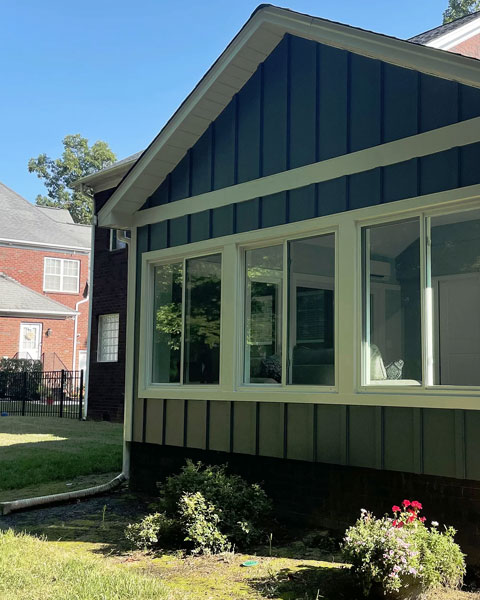
They’re built to match the home, not contrast it. That’s why a lot of homeowners deciding between a pergola vs. patio cover end up choosing a covered structure; it feels more finished and permanent.
Both work as backyard shade structures.
Just depends on whether you want something that feels integrated… or something that stands out a bit more.
Weather Protection in the Carolinas
This is where the difference actually shows up in real use.
The Carolinas aren’t just hot. It’s humidity, direct sun, and random rain that shows up without warning. So when you’re comparing a covered patio vs. a pergola, weather ends up mattering more than expected.
Covered patios handle that better.
You’re getting consistent protection from both sun and rain, which makes the space usable more often. That reliability is one reason many homeowners choose to work with experienced covered patio builders.
Pergolas can still work, but they rely more on adjustments.
That usually means leaning into pergola shade options. Canopies, fabric covers, and different add-ons. Even then, it’s not the same level of protection. Light still shifts. Pergolas provide less rain protection unless additional covers or canopies are installed.
So it comes down to tolerance and how much you’re okay with once you’re actually out there using the space.
Pergola vs. Covered Patio Pros and Cons
Pergola Pros
- Lower upfront cost
- Better airflow
- Flexible shade options
- Strong visual appeal
Pergola Cons
- Less consistent shade
- Limited rain protection without upgrades
Covered Patio Pros
- Full shade and rain protection
- More usable in changing weather
- Feels integrated with the home
- Long-term permanent structure
Covered Patio Cons
- Higher upfront investment
- Longer installation timeline
Charlotte Deck Builders Designs and Builds Custom Shade Structures
Still deciding between a covered patio or a pergola? Charlotte Deck Builders designs and builds custom pergolas and covered patios based on your shade goals, home style, and how you plan to use the space year-round.

The President of Charlotte Deck Builders
Diego Machado has always had a passion for creating beautiful and functional outdoor living spaces. As the president of Charlotte Deck Builders, Diego takes part in designing and constructing decks, porches, patios, pergolas, and more. Diego has successfully led his team of skilled and experienced contractors to complete numerous custom luxury hardscaping projects across North Carolina and South Carolina.
When he’s not helping to beautify local outdoor areas, Diego loves spending time with his cherished family and friends and exploring new destinations as an avid traveler.